Sustainability at Ladybug Lane
To me, sustainability on the farm means leaving the Earth better than we found it. Building a healthy ecosystem starts with healthy soil, which is why I don’t use synthetic pesticides or fertilizers on my farm. These chemicals, combined with other practices used in industrial agriculture, have been linked to waterway pollution, topsoil erosion, and widespread habitat destruction. As a farmer, I believe it is my duty to protect the land and grow my crops without creating a negative environmental impact. Additionally, it is very important to me to offer pesticides-free food and flowers to my community.
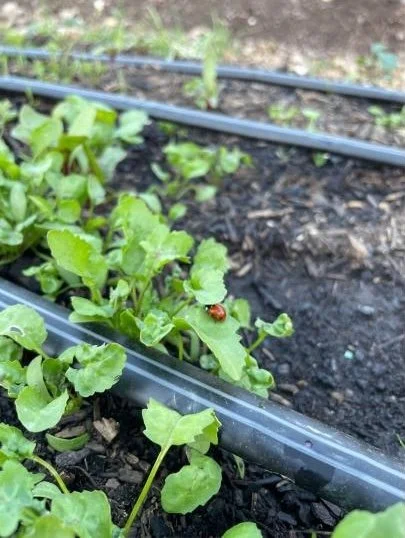
Freshwater is one of the most important natural resources on Earth, and it is important to me to conserve water on my farm. For that reason, I use drip irrigation which allows water to be applied directly to the roots of the crops, minimizing water wasted by misplacement as well as evaporation. Additionally, I water before sunrise in the summer, which cools the crops and allows them to hydrate before the hot sun rises.
Conservation of Natural Resources
Building Healthy Soil
In order to have a successful farm, the soil must be healthy and functioning. To build healthy soil, I focus on adding in nitrogen rich compost as well as natural carbon sources like leaves, in order to feed soil microorganisms. These microbes are critical in the carbon and nitrogen cycles, will cycle nutrients through the atmosphere and the Earth, in order to provide for living organisms, like plants! With functional, living soil, plants can grow strong and combat certain amounts of pest and disease pressure. On the contrary, industrial agriculture commonly uses synthetic pesticides and fertilizers, which disrupts the soil microbes and depletes the ecosystem.
Land Acknowledgement
Ladybug Lane exists on the ancestral homelands of the Wichita, Caddo, Comanche, and Cherokee people. These Indigenous peoples were dispossessed of and removed from their land over centuries by European colonization and American expansionism. We pay our respects to elders, both past and present, and acknowledge the original stewards of the land and the ecosystem.
Additionally, I would like to acknowledge the structural racism that is intertwined with farming in America. There is significant racial and ethic disparities when considering farmworker representation, landowners, and who is profiting the most from the land. Additionally, undocumented workers, who make up a huge percentage of farm labor in the United States, lack the rights to fair pay and fair treatment on farms.